
- Buy Crypto
- Markets
- Futures
- Spot
- Copy Trade
 Earn
Earn- More
$85 Million Bet on Web3 Dining: How Blackbird is Using Blockchain to Reinvent the Trillion-Dollar Loyalty Market?

Original Article Title: "With Total Funding of $85 Million, What is the Web3 Project Blackbird Aiming for in the Restaurant Industry?"
Original Article Author: Zen, PANews
Recently, the Web3 restaurant loyalty and payment platform Blackbird announced that it had successfully raised $50 million in its Series B funding round. Against the backdrop of a prolonged downturn in the primary market, this substantial funding undoubtedly demonstrates the crypto industry's expectation for the large-scale implementation of consumer applications, and reflects the confidence of many top crypto investment institutions in the project's prospects.
In the traditional restaurant market, high intermediary commissions and various service fees have become a burden that many small and medium-sized restaurants find difficult to bear, prompting the industry to urgently seek new solutions. At the same time, the cryptocurrency field urgently needs consumer-facing products and practical use cases. It seems that these two areas, each facing challenges, may have an opportunity to address each other's weaknesses through deep integration.
So, what exactly is Blackbird doing based on blockchain and cryptocurrency technology, and what is its potential?
Raised $85 Million in Funding, Targeting the Large Consumer Market of the Restaurant Industry
The Web3 restaurant loyalty and payment platform Blackbird, founded by Ben Leventhal, is positioned as a loyalty and payment solution for the restaurant industry. Leventhal has over 20 years of experience in the food and technology industry—back in 2005, he co-founded the food information website Eater, initially focused on the dining and nightlife scene in New York City, and was later acquired by digital media company Vox Media in 2013; in 2014, Leventhal co-founded the restaurant online reservation platform Resy with others, which was acquired by American Express in 2019.

Blackbird Founder Ben Leventhal
After years of deep cultivation in the restaurant industry, Leventhal gradually realized the limitations of traditional loyalty and reservation systems. Although they can bring short-term traffic, they cannot truly establish a "deeply interconnected" long-term relationship between restaurants and diners. Leventhal believes that for the restaurant industry to achieve this goal and ensure economic sustainability, restaurants must retain more commercial value and build a reward and loyalty ecosystem. This is the origin of Blackbird and the problem the platform aims to solve.
Food is a basic necessity for people. With a trillion-dollar scale, the food and beverage economy is the most fundamental and largest consumption sector, making it an ideal "testing ground" for the widespread adoption of cryptocurrency in the industry. Therefore, aiming to break through from the consumer application end and based on blockchain and cryptocurrency technology, Blackbird has also been highly anticipated and favored by the crypto venture capital industry. According to public information, since its establishment in 2022, Blackbird has raised approximately $85 million:
In October 2022, Blackbird announced the completion of an $11 million seed round of financing, led by Union Square Ventures, Shine Capital, and Multicoin Capital;
In October 2023, Blackbird announced the completion of a $24 million Series A round of financing, led by a16z Crypto, with participation from QED, Union Square Ventures, Shine, Variant, and several restaurant groups;
In April 2025, Blackbird announced the completion of a $50 million Series B round of financing, led by Spark Capital, with participation from Coinbase, a16z Crypto, among others. Leventhal stated that this funding was raised in Q4 2024 and refused to disclose the implied valuation of this round of financing.
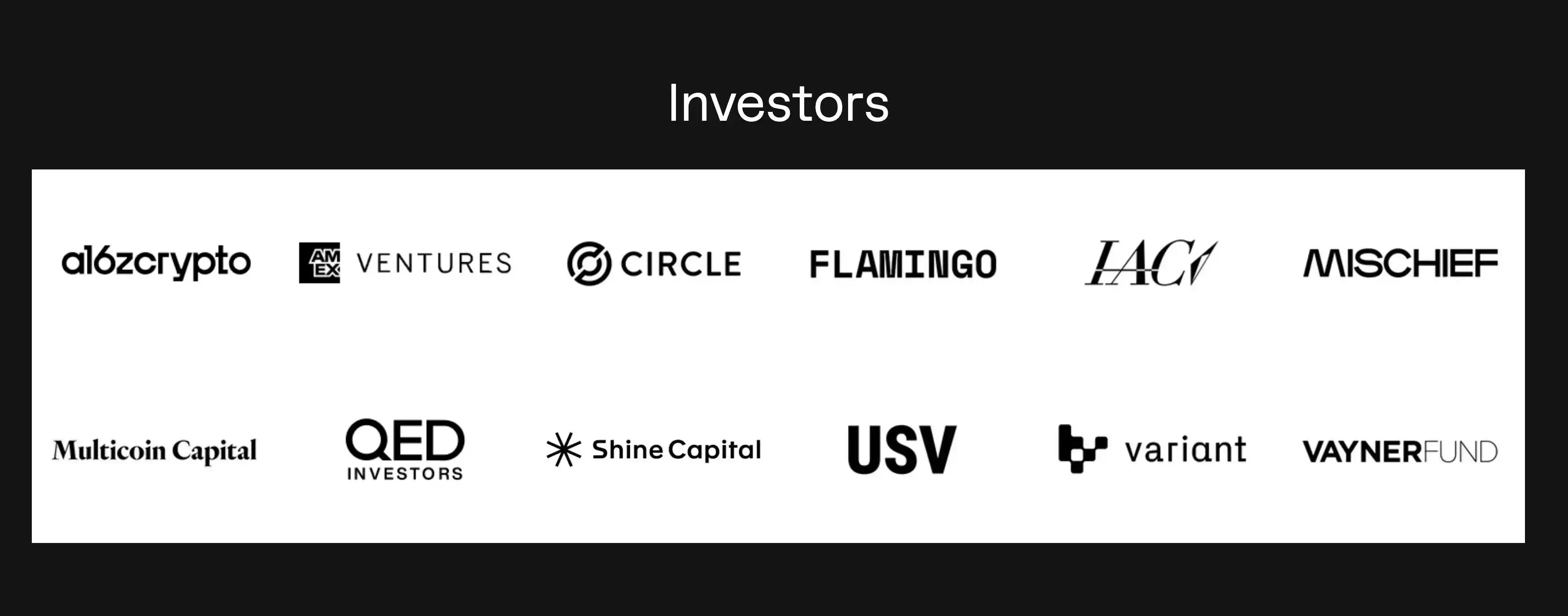
Blackbird Investor Lineup
Arianna Simpson, a general partner at a16z, believes that the restaurant industry is made up of millions of local small business owners worldwide, and these restaurants are completely at the mercy of tech platforms. These platforms can extract a large commission from the restaurant's profits, and this percentage is often increasing. This is where blockchain can play a role in improving the profit structure. She said, "Ben Leventhal's vision is to build a network owned by restaurants and diners themselves, which can only be achieved through blockchain."
Building Flynet Mainnet: Decentralized, Low-Cost, Tailored for the Restaurant Industry
One of Blackbird's main goals is to eliminate unnecessary intermediaries, including payment processors and other service providers between restaurants and customers. Leventhal estimates that restaurants lose an average of 3% to 5% of their revenue to third parties, who do not create enough value. Therefore, by building a blockchain-based platform, Blackbird aims to establish a more direct connection between restaurants and customers, reduce costs, and improve the overall dining experience.
On February 27, 2025, Blackbird announced the official launch of the Flynet mainnet. Flynet is built on top of Coinbase's Base Chain, Layer 3, aiming to fully migrate restaurant payments and loyalty systems to the blockchain, achieving a new payment and incentive model based on "decentralization" and "low cost."
Flynet is a transaction network created by Blackbird specifically for the restaurant industry. Based on this, Blackbird will build a reward and loyalty ecosystem to optimize the interaction between restaurants, restaurant customers, and restaurant staff in the restaurant industry, recording activities between any two parties. According to Ben Leventhal's article, Flynet will have four core advantages:
Reduction of intermediary costs: Traditional credit card fees can be as high as 3.75% or more, while Flynet adopts a 2% fixed rate and instantly returns 1.5% of the revenue to the restaurant for customer acquisition and retention;
Data sovereignty regained: Both restaurants and consumers can have and share consumption data on-demand, helping restaurants gain insights into customer preferences and improve marketing efficiency;
Seamless modern experience: Combined with the Blackbird App, customers do not need to carry physical cards or wait for bills, as they can complete settlements by scanning a QR code or with one-click payment, achieving real-time on-chain settlements in seconds;
Unlocking a new loyalty economy: Flynet supports a tokenized points system across restaurants, allowing restaurants to customize reward plans based on on-chain behavior and incentivize high-frequency users through exclusive experiences (such as hidden menus, chef interactions).
As a decentralized network, according to its design, it will ultimately be controlled by its network users, namely holders of the Flynet native token $F2. $F2 is the native token of the Flynet mainnet, used to pay on-chain gas fees and carry governance rights. The team plans to airdrop 13% of the token supply to early users and restaurants, with the remaining 87% allocated to internal personnel, treasuries, and participants in subsequent growth stages. The previously designed $FLY token still serves as loyalty points within the Blackbird app, allowing for meal discounts and platform benefits redemption.
Furthermore, upon the launch of Flynet, Blackbird also introduced a developer portal, inviting ecosystem partners and developers to build more application scenarios based on the network, including data visualization, data markets, consumer market tools, third-party access, and marketing tools.
Blackbird Club: A Tiered Loyalty Program Unlike Points Model
Alongside the announcement of a $50 million Series B funding, Blackbird also unveiled the Blackbird Club, a tiered loyalty program designed to reward its most loyal users with surprises and exclusive experiences instead of simple points redemption. Members will receive generous benefits, including reservation guarantees, exclusive event presales, as well as secret perks such as hidden menu tastings and special events for friends and family.
“Our aim in creating the club was to establish top-tier restaurants and premium guests.” Blackbird stated, with the initial participating restaurants including Gjelina, La Tête d'Or, and Barbuto in New York; SPQR, Frances, and Octavia in San Francisco; and Leon's, Melfi's, and Renzo in Charleston.

Traditional restaurant membership systems are usually based on a "swipe-to-earn" or "spend-to-get-cash-back" model, where users accumulate points based on their spending and can redeem them for dining vouchers, discounts, etc. This model is known as Transactional Loyalty, where the core is “spend money, get rewarded,” fundamentally focusing on rewarding “money” rather than “relationships.”
The concept introduced by the Blackbird Club is Experiential Recognition, believing that true customer delight and feeling of being “welcome” and “special” do not come from points themselves but from whether they can participate in the restaurant's culture, feel emotional connections, and receive identity recognition. The Blackbird Club plans to achieve this transformation through the three key pillars of rewards, channels, and conveniences, as well as the two membership levels of Blackbird Club 3X and Blackbird Club 5X—taking into account not only spending levels but also user visit frequency and community contribution. It emphasizes more on whether you are part of the restaurant's culture rather than just the thickness of your wallet.
At its core, Blackbird has turned loyalty from a mere tool into a cultural bond, combining Web3 technology with emotional dining experiences to make the act of “eating out” more personal, respectful, and communal. Blackbird also proposes that in the future, it will launch a version for professionals to provide exclusive rewards and recognition for the group overlooked from the traditional loyalty system perspective, catering to chefs, servers, and restaurant managers. Blackbird stresses, “Those who serve guests with heart should also be well-served.”
Web3 Loyalty Program: Great Potential but Difficult Implementation?
User loyalty has always been one of the most important topics for major brands when competing for consumers. Especially in the food and beverage industry, when taste and quality control fail to create significant differentiation, businesses often rely on innovation and marketing strategies to create a novel and enjoyable consumer experience, thus establishing a deeper emotional connection with consumers.
Take Luckin Coffee as an example. Its "User as a Member" operational model disrupted the traditional points system, reducing the participation threshold and greatly increasing user engagement. By regularly offering limited-time discounts, encouraging friend referrals, and other means, it also effectively increased user retention rates. In addition, collaborations between brands have become a powerful method to enhance user freshness and brand exposure. Luckin's cross-branding with Maotai and "Tom and Jerry" has sparked discussions and become a phenomenal event; and more recently, McDonald's collaboration with "Minecraft" has gained widespread popularity on social media due to its creativity and interactivity.
In comparison, loyalty programs in the Web3 world seem to have not yet found a truly viable path. The once highly anticipated Starbucks NFT loyalty program, Starbucks Odyssey, was ultimately announced to be terminated in March 2024. The failure of this project reflects its complex participation process, vague value proposition, and a significant decrease in mainstream users' interest and awareness of digital collectibles after the NFT craze subsided. This also indicates that merely giving users the "ownership" of an NFT is far from sufficient to establish a truly sticky loyalty system.

"In Memory" of Starbucks Odyssey
In response to this, Jesse Walden, the founder and managing partner of Variant, proposed that a truly sustainable loyalty ecosystem should be like Blackbird, based on a decentralized transaction network, where every user's consumption behavior is recorded on-chain, and incentivization and governance are achieved through native tokens, thus creating network effects and long-term stickiness. In contrast, Odyssey only distributed NFTs in one direction, lacking on-chain interactions and token mechanisms, making it difficult to ignite users' continuous participation and community-building enthusiasm.
Of course, for Blackbird, which is still in its early stages, the future will still need to face challenges such as regulatory uncertainty, market fluctuations, and the potential erosion of the project's core value by price volatility and speculative behavior. Moreover, in a context where traditional loyalty operation models have become mature and competition is increasingly fierce, whether Blackbird can truly have long-term competitiveness remains unknown. It is even worth considering whether blockchain technology is truly an indispensable underlying infrastructure for such systems, a topic that is widely debated.
As Blackbird founder Ben Leventhal candidly admitted, "I don't think it needs to be built on the blockchain." He mentioned that Visa's network, to some extent, also follows principles similar to those of Flynet without leveraging blockchain.
"We do believe that over time, some things will become important opportunities, and those opportunities will be based on chainification," added Leventhal. These opportunities include how Blackbird and restaurants store customer data and activities, which also ties into their future vision—where every restaurant customer will ultimately become a Blackbird "shareholder."
You may also like

Russia’s Largest Bitcoin Miner BitRiver Faces Bankruptcy Crisis – What Went Wrong?
Key Takeaways BitRiver, the largest Bitcoin mining operator in Russia, faces a bankruptcy crisis due to unresolved debts…

Polymarket Predicts Over 70% Chance Bitcoin Will Drop Below $65K
Key Takeaways Polymarket bettors forecast a 71% chance for Bitcoin to fall below $65,000 by 2026. Strong bearish…

BitMine Reports 4.285M ETH Holdings, Expands Staked Position With Massive Reward Outlook
Key Takeaways BitMine Immersion Technologies holds 4,285,125 ETH, which is approximately 3.55% of Ethereum’s total supply. The company…

US Liquidity Crisis Sparked $250B Crash, Not a ‘Broken’ Crypto Market: Analyst
Key Takeaways: A massive $250 billion crash shook the cryptocurrency markets, attributed largely to liquidity issues in the…

Vitalik Advocates for Anonymous Voting in Ethereum’s Governance — A Solution to Attacks?
Key Takeaways Vitalik Buterin proposes a two-layer governance framework utilizing anonymous voting to address collusion and capture attacks,…

South Korea Utilizes AI to Pursue Unfair Crypto Trading: Offenders Face Severe Penalties
Key Takeaways South Korea is intensifying its use of AI to crack down on unfair cryptocurrency trading practices.…

Average Bitcoin ETF Investor Turns Underwater After Major Outflows
Key Takeaways: U.S. spot Bitcoin ETFs hold approximately $113 billion in assets, equivalent to around 1.28 million BTC.…

Japan’s Biggest Wealth Manager Adjusts Crypto Strategy After Q3 Setbacks
Key Takeaways Nomura Holdings, Japan’s leading wealth management firm, scales back its crypto involvement following significant third-quarter losses.…
CFTC Regulatory Shift Could Unlock New Opportunities for Coinbase Prediction Markets
Key Takeaways: The U.S. Commodity Futures Trading Commission (CFTC) is focusing on clearer regulations for crypto-linked prediction markets,…
Hong Kong Set to Approve First Stablecoin Licenses in March — Who’s In?
Key Takeaways Hong Kong’s financial regulator, the Hong Kong Monetary Authority (HKMA), is on the verge of approving…

BitRiver Founder and CEO Igor Runets Detained Over Tax Evasion Charges
Key Takeaways: Russian authorities have detained Igor Runets, CEO of BitRiver, on allegations of tax evasion. Runets is…

Crypto Investment Products Struggle with $1.7B Outflows Amid Market Turmoil
Key Takeaways: The recent $1.7 billion outflow in the crypto investment sector represents a second consecutive week of…

Why Is Crypto Down Today? – February 2, 2026
Key Takeaways: The crypto market has seen a downturn today, with a significant decrease of 2.9% in the…

Nevada Court Temporarily Bars Polymarket From Offering Contracts in the State
Key Takeaways A Nevada state court has temporarily restrained Polymarket from offering event contracts in the state, citing…

Bitcoin Falls Below $80K As Warsh Named Fed Chair, Triggers $2.5B Liquidation
Key Takeaways Bitcoin’s price tumbled below the crucial $80,000 mark following the announcement of Kevin Warsh as the…

Strategy’s Bitcoin Holdings Face $900M in Losses as BTC Slips Below $76K
Key Takeaways Strategy Inc., led by Michael Saylor, faces over $900 million in unrealized losses as Bitcoin price…
Trump-Linked Crypto Company Secures $500M UAE Investment, Sparking Conflict Concerns
Key Takeaways A Trump-affiliated crypto company, World Liberty Financial, has garnered $500 million from UAE investors, igniting conflict…

Billionaire Michael Saylor’s Strategy Buys $75M of More Bitcoin – Bullish Signal?
Key Takeaways Michael Saylor’s firm, Strategy, has significantly increased its Bitcoin holdings by acquiring an additional 855 BTC…
Russia’s Largest Bitcoin Miner BitRiver Faces Bankruptcy Crisis – What Went Wrong?
Key Takeaways BitRiver, the largest Bitcoin mining operator in Russia, faces a bankruptcy crisis due to unresolved debts…
Polymarket Predicts Over 70% Chance Bitcoin Will Drop Below $65K
Key Takeaways Polymarket bettors forecast a 71% chance for Bitcoin to fall below $65,000 by 2026. Strong bearish…
BitMine Reports 4.285M ETH Holdings, Expands Staked Position With Massive Reward Outlook
Key Takeaways BitMine Immersion Technologies holds 4,285,125 ETH, which is approximately 3.55% of Ethereum’s total supply. The company…
US Liquidity Crisis Sparked $250B Crash, Not a ‘Broken’ Crypto Market: Analyst
Key Takeaways: A massive $250 billion crash shook the cryptocurrency markets, attributed largely to liquidity issues in the…
Vitalik Advocates for Anonymous Voting in Ethereum’s Governance — A Solution to Attacks?
Key Takeaways Vitalik Buterin proposes a two-layer governance framework utilizing anonymous voting to address collusion and capture attacks,…
South Korea Utilizes AI to Pursue Unfair Crypto Trading: Offenders Face Severe Penalties
Key Takeaways South Korea is intensifying its use of AI to crack down on unfair cryptocurrency trading practices.…


 App
App