
- Buy Crypto
- Markets
- Futures
- Spot
- Copy Trade
 Earn
Earn- More
Undercover for 40 Days, Exposing the Golden Triangle Park Crypto "Rug Pull"

Original Title: He Leaked the Secrets of a Southeast Asian Scam Compound. Then He Had to Get Out Alive
Original Author: Andy Greenberg, WIRED Magazine
Original Translator: Luffy, Foresight News
Editor's Note: Deep in the jungles of the Golden Triangle, the concrete buildings of a scam compound have become a living hell for numerous individuals, harboring transnational cryptocurrency Ponzi schemes. Red Bull, a computer engineer who ventured abroad from the India-Pakistan border in search of a job, fell into the trap but chose to become a whistleblower upon recognizing the darkness. He risked his life to gather evidence within the lion's den, collaborating from afar with WIRED Magazine journalist Andy Greenberg to expose this dark industry's secrets. After Red Bull escaped the abyss, Andy Greenberg penned a lengthy article detailing his and Red Bull's story. The following is a translation of the original content:
A Cry for Help from the Golden Triangle
It was a pleasant June night in New York when I received the first email from this informant, who asked me to call him Red Bull. At that time, he was in a living hell 8000 miles away.
After a summer shower, a rainbow hung over the Brooklyn neighborhood, my two children frolicking in the rooftop kiddie pool of the apartment building. As the sun set, I, in the typical 21st-century parental manner, was engrossed in various apps on my phone.
The email had no subject line, and the sender's address was from the encrypted email service platform Proton Mail. I opened the email.
"Hello, I am currently working inside a large cryptocurrency Ponzi scheme scam group in the Golden Triangle area," the email began. "I am a computer engineer, forced to sign a contract to work here."
"I have collected the core evidence of this scam process, with every step documented," the email continued. "I am still inside the compound, so I cannot risk revealing my true identity. But I hope to help shut down this operation."
I vaguely knew that the Golden Triangle was a lawless jungle area in Southeast Asia. But as a journalist who has covered cryptocurrency crime for 15 years, I was well aware of this type of cryptocurrency scam, now known as a 'Ponzi scheme'—where scammers use romance and high-yield investments as bait to deceive victims into handing over their life savings—which has become the most profitable form of cybercrime worldwide, with annual amounts involved reaching hundreds of billions of dollars.
Today, this intricate web of fraud is sustained by hundreds of thousands of forced labor victims in various fraud hubs in Myanmar, Cambodia, and Laos. These victims, trafficked from the poorest regions of Asia and Africa, are compelled to work for criminal organizations. What ensues is a self-perpetuating, ever-expanding, global money funnel that plunges both sides into a life of despair: on one end, bankrupted fraud victims, and on the other, enslaved hub laborers.
I have read countless harrowing accounts of fraud hubs: laborers enduring beatings, torture with electric prods, hunger, and even murder by their controllers. Most of these stories come from a few survivors who have successfully escaped or been rescued by law enforcement. But I have never encountered someone still inside a fraud hub voluntarily stepping forward as a whistleblower—a true insider.
I still cannot be sure if this self-proclaimed insider truly exists. Nonetheless, I replied to the email, asking him to switch to the encrypted messaging app Signal and activate the message self-destruct feature to better conceal his tracks.
The insider immediately responded, asking me to wait two hours before contacting him again.
The Red Bull of the Trapped Hub
That night, after the children had fallen asleep, my phone began buzzing with Signal message notifications. Initially, he sent meticulously organized documents: a flowchart followed by a written guide detailing the entire fraud process of the fraud hub in northern Laos. (I later learned that the term Golden Triangle, once used by Americans to refer to a massive opium and heroin-producing region, now mainly refers to an "economic zone" in Laos bordering Myanmar and Thailand, controlled primarily by Chinese commercial forces.) These two documents meticulously documented every step of the hub's operation: creating fake Facebook and Instagram accounts; hiring models and using AI deepfake tools to create realistic illusions of romantic interests; and luring victims to "invest" on their recommended fake trading platforms. The materials even mentioned a small gong in the office that would be struck in celebration every time someone successfully defrauded.
Before I could delve into these detailed contents, intending to spend a good Saturday night with my wife, my phone rang just past midnight.
I answered the Signal voice call, and a voice with a polite Indian accent said, "Hello."
"How should I address you?" I inquired.
"Brother, you can call me whatever you like, it doesn't matter," the voice replied with a shy smile.
I insisted on having a codename, even if it was something he came up with on the spot.
“You can call me Red Bull,” he said. Months later, he told me that while speaking with me, he was looking at an empty can of Red Bull energy drink.
Red Bull said that he had previously contacted law enforcement in the U.S. and India, as well as Interpol, and had left messages with several media hotlines for tips, but I was the only one who responded. He wanted me to tell him more about my situation, but as soon as I mentioned my work reporting on cryptocurrency crime, he interrupted me.
“So, you're the one I can trust with everything,” he said eagerly. “You will help me expose all of this, right?”
I was caught off guard for a moment and told him that he needed to tell me who he was first.
Over the next few minutes, Red Bull cautiously answered my questions. He didn't reveal his real name, only saying he was from India, and that most of the forced laborers in the compound were from India, Pakistan, or Ethiopia.
He said he was in his early twenties and held a degree in computer engineering. Like most of his colleagues, Red Bull had been lured in by false job postings. He received a job offer to be an IT manager at an office in Laos. Upon arrival, his passport was confiscated. He was forced to share a dormitory with five other men, work on a night shift schedule, work for 15 hours straight at a time, and this work schedule conveniently aligned with the daytime hours of their targets – Indian-American victims of the scam. (I later learned that this pattern of connecting scammers with victims of the same ethnicity is very common to build trust and avoid language barriers.)
Red Bull's situation was not as brutally cruel as the extreme modern slavery I had seen before, but rather a ludicrous imitation of a corporate sales department. In theory, the compound would incentivize employees with commissions to create the illusion of “working hard to get rich.” In reality, employees were always burdened with debt, effectively enslaved. Red Bull told me that his monthly base salary was 3,500 Chinese yuan, approximately $500, but this money was almost entirely deducted through various fines, with the most common reason for fines being the failure to meet the initial communication targets with victims. In the end, he had almost no actual income, barely surviving on cafeteria food, mostly rice and vegetables that he said tasted strange, with a chemical-like flavor.
He was bound by a one-year contract and had thought that he would be allowed to leave once the contract expired. He told me that so far, he had never successfully scammed anyone, only barely meeting the minimum required fake communication counts. This meant that unless he escaped, completed the contract term, or came up with thousands of dollars that he didn't actually have for ransom, he would forever be a prisoner there.
Red Bull said he had heard of someone being beaten, shocked, and a female employee who he believed had been trafficked, along with some colleagues who had inexplicably disappeared. "If they know I'm reaching out to you, that I'm going against them, they will straight-up kill me," he said, "But I swear to myself, whether I make it out alive or not, I'm going to stop this scam."
Gathering Evidence in the Lion's Den
Next, Red Bull mentioned the urgent purpose of this call: he had learned that the campus was conducting a scam targeting an Indian-American man who had been scammed at least once before but was still being led on by one of Red Bull's colleagues. The victim's cryptocurrency wallet service provider seemed to suspect foul play, freezing his account. Therefore, the campus planned to send a contact to retrieve the five-figure cash the victim was prepared to pay.
The withdrawal would take place in three to four days, and the victim, who lived just a few hours away from me, Red Bull explained, could alert law enforcement quickly enough to assist in setting up a trap to catch the contact person. In addition to this lead, he also hoped I could help him get in touch with an FBI investigator as his subsequent contact person, while he would continue to act as an informant and coordinate with me. Our call lasted only 10 minutes.
Impatiently, Red Bull said he would send detailed information on Signal and then hung up. A few seconds later, he sent screenshots of internal campus chat records, conversations between colleagues and the victim, and more details on the planned trap he wanted me to arrange.
My head spun, and after a brief pause, I unexpectedly redialed Red Bull's Signal call, also turning on the video. I wanted to see who I was really talking to.

This is Red Bull's first video call with WIRED Magazine, captured from a hotel room during a Signal video call
Red Bull answered the video. He was slender, handsome, with slightly curly hair and a neatly trimmed beard. He gave me a faint smile, seemingly unconcerned about revealing his face. I asked him to show me around, and he turned the camera to reveal an empty hotel room. He explained that he had taken the risk of booking a room in the hotel next to the office area to talk to me. Outside the window, there was an ugly concrete building, a parking lot, a construction site, and a few palm trees.
At my request, he walked outside to show me the Chinese sign at the entrance of the building. I didn't know much about the Golden Triangle, but everything in front of me was undeniably it.
Finally, Red Bull showed me his work permit, which had a Chinese name given to him by the park: Ma Chao. He explained that all employees in the office didn't know each other's real names.
I began to believe everything Red Bull said: he was indeed a true whistleblower in the Laotian scam park. I told him I would consider all his requests but wanted to cooperate with him patiently and cautiously to minimize his risk.
"I trust you. I will follow all your arrangements," he replied at 1:33 a.m. "Good night to you."
At 4 a.m., I was still lying in bed, unable to sleep, repeatedly thinking about how to deal with this eager new source, who seemed determined to entrust his life to me.
After a few hours of sleep, I texted Erin West, a prosecutor from California, or rather, as I learned in a later call, a former prosecutor. At the end of 2024, extremely disappointed with the U.S. government's inaction in combating the rampant pig slaughter problem, she retired early from her role as Deputy District Attorney and now runs her anti-fraud organization, Operation Shamrock.
I consulted West on who to contact in law enforcement to assist in arranging the trapping operation proposed by Red Bull. To my surprise, West showed far more enthusiasm than expected for the article Red Bull hoped for me to write. "This is a huge deal," West said. "Finally, an insider is willing to come forward to share this information and expose the inner workings of the entire fraud operation."
However, she quickly dismissed the idea of a trap. She said there was no time to arrange it and believed that arresting a low-level contact was far from the significant victory Red Bull envisioned. She explained that these contacts were mostly freelancers, lower in the fraud hierarchy than Red Bull, and knew no valuable information.
More importantly, whether carrying out the trap or me personally reaching out to victims through Red Bull could alert the scam park to an insider threat, potentially tracing back to Red Bull and putting him in jeopardy. To stop a six-figure scam or arrest a contact, exposing him to risk, would simply not be worth it.
My contact with Red Bull has been less than 24 hours, but I have already made a decision: to protect him, even though this six-figure scam is about to take place, I can only stand by and watch.
West also told me that, aside from the trap, she did not think handing Red Bull over to the FBI was a good idea. She said that if he became an informant for law enforcement, the FBI or Interpol would almost certainly cut off his contact with me or any other journalist. And the information he provided to the Federal Bureau of Investigation would likely result in far less than he expected: at most, absentia criminal charges against the low-level boss. "If he thinks the FBI and Interpol are going to come into Laos and bust this operation, it's absolutely not going to happen. No one is coming to save him."
She believed that instead of pursuing a case against this one scam operation, a more valuable approach would be to use all the information Red Bull could provide to tell a larger story: to expose the true conditions of the slaughterhouse complex, their operational details, and the scale of the industry. While some survivors of the complex had described these aspects before, to West's knowledge, there had never been a real-time leak of documents and evidence from an insider revealing such a comprehensive exposé.
West told me that due to the Trump administration's dismantling of the United States Agency for International Development, an agency that had funded humanitarian organizations in the region, it had become increasingly difficult to quantify the scale of human trafficking behind the scam operation. "The Trump administration coming in has cut off all of our eyes and ears on the ground," West said.
All of this allowed the criminal enterprise to continue to exploit this slave system and steal the wealth of our generation. As West described, this system is increasingly taking hold of an entire region of the world. "At the heart of this story is how we've let these criminals take root in Southeast Asia like a festering cancer," West said, "and how all of this has eroded trust between people."
I told Red Bull that, for his safety, we could not arrange for his arrest. I also explained to him that if he wanted to continue as my informant, he might need to temporarily suspend contact with law enforcement. He unexpectedly and decisively accepted all of this. "Okay, let's do it your way," he said.
Soon, Red Bull and I established a regular communication pattern: a call every morning New York time, which is around 10 p.m. in Laos, just as he was waking up, with half an hour before heading to the cafeteria for dinner, giving him time to walk outside his dorm. After this dinner, he would begin about a 15-hour work shift, with only two meal breaks during that time.
In our initial conversations, he spent most of the time proposing increasingly risky methods of gathering evidence: he wanted to wear a hidden camera or microphone; suggested installing remote desktop software so I could see everything on his computer screen in real time; volunteered to plant spyware on his team leader's computer — his team leader, an Indian employee who wore aviator sunglasses, sported a short beard, and went by the alias "Amani"; he even planned to hack into Amani's boss's laptop, a boss known as "50k," a short, chubby Chinese man in tight pants with a chest tattoo, though Red Bull could never make out what the tattoo actually depicted. He believed this spyware might help us gather intelligence on communications between 50k and his superior "Alang," whom Red Bull had never seen in person.
For these bold ideas, I consulted with colleagues and professionals, and their answers were unanimous: evidence collection using hidden cameras requires specialized training; the software Red Bull wanted to install on the office computer would leave traceable evidence; in other words, these practices were highly likely to result in his discovery and subsequent demise.
In the end, we settled on a much simpler method: during work hours, he would log into Signal on the office computer, send me messages and materials, and simultaneously set Signal's disappearing messages feature to 5 minutes to cover his tracks. Sometimes, to provide a cover-up and avoid detection, he would start calling me "uncle," pretending to be just talking to a relative.
We also established a set of secret codes: one party would send "Red," and the other would reply with "Bull," through this conversation, confirming that the account had not been compromised by someone else. Red Bull also came up with a way to change the application name and icon of Signal on the computer to make it look like a desktop shortcut of a hard drive.

He began sending me a steady stream of photos, screenshots, and videos: a spreadsheet, as well as a photo of a whiteboard where his team's work progress was recorded, with many members' nicknames alongside, indicating fraudulent amounts in the thousands of dollars; in the office, there was a Chinese-style ceremonial drum, which would be beaten to celebrate whenever someone successfully defrauded over $100,000; page after page of chat records posted in the office's WhatsApp group, documenting Red Bull's colleagues' fraudulent achievements and the desperate responses of the victims: "I have always dreamed of having a girlfriend like you and then getting married," "Why aren't you replying to my messages," "I will keep praying for your mother," "Please, help me withdraw the money," "?????".
There was also a video showing a victim crying in a car, having been swindled out of a six-figure sum; this victim sent the video to the scammer, perhaps trying to evoke their sense of guilt, but unexpectedly, the video was passed around the office, becoming a source of mockery for everyone.
Every employee in the team had to report on their work progress daily: how many times they initiated "initial contact," how many times they engaged in "deep conversation," which were the dialogues that could lead to fraud. Their group chat was filled with various cryptic terms, such as using "developing new clients" to refer to luring new targets and using "reinvestment" to refer to victims falling for the scam again. Each team had performance targets, usually around $1 million per month. Meeting the targets granted employees the right to weekend breaks, snacks in the office, and even the opportunity to attend parties at nearby clubs. (Red Bull mentioned that during these parties, bosses would socialize in private VIP rooms behind drawn curtains.) If the targets were not met, they faced reprimands, fines, and were forced to work seven days a week without a break.

An office whiteboard detailing the results of fraud, with pseudonyms of employees and team names marked next to it. Provided by Red Bull
Each employee also had to post a mandatory daily schedule, but this was not about their night shift life in a fluorescent-lit office, sending messages to Facebook and Instagram. Instead, it was the daily schedule of that wealthy single woman they were pretending to be: "7:00 AM Morning Meditation and Yoga," "9:30 AM Self-care and Vacation Planning," "2:30 PM Dentist Appointment," "6:00 PM Dinner and Chat with Mom."
Sometimes during voice calls, Red Bull would ask me to turn on video and record the screen. He would then walk into the cafeteria, pretending to have a conversation with his "uncle," secretly filming the surroundings. It was as if I were following him, touring the building: the brightly lit lobby, stairwells, and rows of blank-faced South Asian and African men lining up for food. One time, he even captured the inside of the office, a huge beige room where I could see rows of desks with red, yellow, and green flags on them representing each team's fraud achievements.
A few days later, Red Bull and I upgraded our cover identities, with me becoming his secret girlfriend to whom he sent messages sneakily, so if he was caught using Signal, there would be a more plausible explanation. Our conversations were sprinkled with heart emojis, addressing each other as "dear," and ending with "miss you." Eventually, our chat records almost mirrored the fake love scams his team performed every day. But soon after, we found this disguise too awkward and gave it up.
Once, as I was about to sleep, Red Bull sent an unusually emotional farewell message: "Good night! Rest well— you've done enough today. Let your mind unwind, and embrace the new day tomorrow with a fresh perspective and steady strength."
Although the message sounded somewhat stiff when read, I must admit, this particularly thoughtful message touched me. In fact, since the few days of our communication, I've been under immense pressure and barely slept.
Then, the next morning in our call, Red Bull explained to me about ChatGPT, DeepQuest, and other AI chat tools and their roles in the park's fraud operations: the park would train employees to use these tools, refine scripts, control emotions, and always have an endless array of sweet words.
He didn't hesitate to tell me that the good night message from the night before was directly copied from ChatGPT. "Everyone here does this, that's how they teach us," he said.
I couldn't help but laugh. It turns out that just a heartfelt message from a stranger on the other side of the Earth was enough to easily touch someone's heart.
From Indian Mountain Village Boy to Anti-Scam Whistleblower
Every day, during the short minutes Red Bull took from the dorm to the office, besides discussing his security and forensic strategies, I would also ask him how he fell into this scam territory and why he was so determined to expose it all. In fleeting conversation snippets or later long texts, he told me about his 23 years of life.
Red Bull told me he was born in a mountain village in the disputed Jammu and Kashmir region on the India-Pakistan border, with eight siblings, following the Islamic faith. His father was a teacher who sometimes worked as a laborer, and his mother helped tend cows and sell butter to make ends meet.
At the beginning of the 21st century, when Red Bull was still a child, to escape the intermittent conflicts between the Indian army and Pakistani-backed guerrillas, his family would often leave the village and seek refuge in northern Kashmir. Muslim men in the area were sometimes forcibly recruited to fight for the Pakistani-backed armed forces or transport supplies, only to later be labeled as terrorists and killed by the Indian army.
After the conflicts subsided, Red Bull's parents sent him to live with his grandparents in Rajouri, a four-hour drive away, hoping that this exceptionally bright and curious child could receive a better education. He told me that his grandparents were very strict with him. In addition to studying, he had to chop wood, fetch water, and walk 6 miles to school as there were no shoes left, causing blisters on his feet, so he used a rope to tie his pants as a makeshift belt.
Nevertheless, he said he always maintained a stubborn optimism. "I always tell myself: even if today is not good, tomorrow will be better," he wrote in a text message.
At the age of 15, his grandparents sent him to live with two teachers, who made him a servant to pay for his tuition. He woke up before dawn every morning, cleaned the house before breakfast, did the dishes, and then went to school.
He remembered one day in that house when he was mesmerized watching the family's eldest son playing the latest "FIFA" game on the computer—it was the first time Red Bull saw a computer. But the next moment, he was scolded to go back to work. It was from that moment that he became obsessed with computers. "I felt ashamed, disrespected because I didn't even have the privilege to touch a computer," Red Bull wrote. "I told myself, someday, I will be the master of this machine."
After receiving an especially humiliating scolding, Red Bull decided to run away. The next morning, while the family was still asleep, he left and made his way to the city, taking on various odd jobs: cleaning houses, doing construction work, and harvesting rice. For a while, he even went door to door selling Ayurvedic medicine. At night, he would self-study in the rented shack. In 2021, he got admitted to the Computer Science program at the Kashmir Government Polytechnic College in Srinagar, the largest city in the region.
During his university years, the winters in Kashmir were particularly harsh. He slept in a room without proper bedding and often went hungry. A friend taught him how to create Facebook pages for businesses or buy and sell Facebook pages like real estate developers flipping houses. He experimented on the school computers and quickly earned around $200. With this money, he bought a used Dell laptop — his most prized possession that changed his life.
After three years of studying, working odd jobs, and sending money home, he finally graduated with a degree in Computer Engineering. He said it was the first time someone from their village had achieved such a high technical education. It was during this time that he developed a stubborn, even slightly angry determination to rely on himself and carve his own path in life.
“My parents always advised me to be patient, to be strong. Their words gave me some inner strength, but this fight in life, I had to face alone,” he wrote. “No one could truly understand me, but I never stopped fighting against my fate.”
A "Job Search" Journey to Hell
Not long after graduation, Red Bull, relying on creating Facebook pages and websites, was already earning a decent income, with a monthly salary of up to $1000. However, he had bigger ambitions, dreaming of working in artificial intelligence, biomedicine, or becoming an ethical hacker diving into the cybersecurity industry. (The TV show “Mr. Robot” had always been his favorite.) He wanted to study abroad but couldn't afford the fees, and his student loan applications were rejected.
With no other option, he had to work for a year or two to save money. A friend from college told him that there were good job opportunities in Laos. Red Bull started engaging with this middleman, who went by the name Ajaz, claiming to know a mediator who could help him secure a job as an IT manager in Laos, with a monthly salary of around $1700. For Red Bull, this enticing salary meant that he might only need to work for a year to return to campus.
Ajaz had Red Bull fly to Bangkok and then call the recruiting intermediary from the airport. Red Bull boarded the plane, not even knowing the employer's industry but understanding that his job involved computer management. He recalled the excitement of traveling abroad for the first time, with visions of the future filling his mind as he flew over the Indian Ocean at night.
The next morning, in Bangkok, he called the middleman, who was an East African man. The man bluntly told him to take a 12-hour bus ride to Chiang Mai and then a taxi to the Laos border. Upon Red Bull's arrival at the border, he was instructed to take a selfie outside the immigration office and send it to the middleman. Shortly after Red Bull complied, an immigration officer emerged, showing the selfie apparently received from the middleman, and demanded 500 Thai Baht, about 15 USD. Red Bull paid the money, the officer stamped his passport, and then directed him to walk to the Mekong River and board a waiting boat. This ferry crossed the Mekong River in the southern tri-border area of Thailand, Laos, and Myanmar. This location was the Golden Triangle.
Once the boat entered Laos territory, a young Chinese man on the other side of the river displayed the same selfie to Red Bull. Without a word, he took Red Bull's passport, handed it to an immigration officer, and also offered some Renminbi. Quickly, the passport was returned with the visa stamped.
The Chinese man put the passport in his pocket, gesturing for Red Bull to wait for the East African middleman. He then left with Red Bull's passport.
An hour later, the middleman arrived in a white van and drove him to a hotel in northern Laos where he would spend the night. Lying on the empty hotel room bed, all he could think of was the upcoming first official job interview the next day, filled with anxiety and anticipation. At that moment, he was still completely unaware.
The next morning, he was taken to an office in a grey concrete building nestled among the lush mountains of northern Laos, surrounded by other dull buildings. Red Bull nervously sat in front of a desk where a Chinese man and a translator conducted a typing and English test, both of which he easily passed. They informed him that he was hired and then began asking about his familiarity with social networks like Facebook, Instagram, and LinkedIn.
Red Bull enthusiastically answered all the questions. Finally, they asked him if he understood the nature of the work he was about to start. "Am I going to be an IT manager?" he asked. The reply was no, and this time, there was no coded language: he was to be a "fraudster."
It wasn't until this moment that Red Bull finally grasped his situation and fell into extreme panic. The Chinese boss told him he had to start working immediately. To buy some time, he pleaded desperately to go back to the hotel for one more night of rest before starting work. The boss agreed.
That night, in the hotel room, Red Bull frantically searched online for information about the Golden Triangle scam headquarters. It was only then that he realized how deep the trap he had fallen into was: it was too late, he saw thousands of Indians like him, being deceived and imprisoned in the same way, without passports, with no possibility of escape. In this nauseating realization, his parents called via video, asking if he had landed the IT manager job. Suppressing his shame and regret, he said he had, forced a smile, and accepted his parents' blessings.

Colorful flags in each team's workspace represent whether their scam performance meets the target. Provided by Red Bull

A traditional Chinese drum stands in the office, to be beaten whenever an employee successfully scams over $100,000. Provided by Red Bull
Over the next few days, with almost no onboarding training, he was plunged into the operation of this scam organization. He later learned that this compound was called the Boshang Scam Compound. He was trained to create fake accounts, received the scam script, and then started working on night shifts, manually sending hundreds of flirtatious messages each night to lure new victims. After work, he returned to the top bunk in a six-person dorm room, a room smaller than the hotel room he stayed in on his first night.
But he said that from the beginning, he was determined to fight fate once again. He found that he understood computers better than most colleagues, even more than the boss. Those bosses seemed to only know how to use social media, AI tools, and cryptocurrency. In just a few days, he began to fantasize about using his technical skills to quietly gather information about the compound and then, in some way, expose it.
Red Bull gradually realized that there was actually little stopping him from leaking the compound's secrets. During working hours, team leaders would take away employees' personal phones, put them in a box, and strictly prohibit employees from taking work devices out of the office. However, apart from this, the monitoring of employees and their personal phones in the compound was unexpectedly lax.
In Red Bull's view, the bosses seemed to mainly rely on fear and despair to control these trafficked victims, and most colleagues seemed to have lost all hope of resistance. "They tell themselves that just staying alive is the only goal, and then suppress all human things," Red Bull wrote, "empathy, guilt, and even memories of their past."
And the reason he could maintain hope was in part that he felt different from himself and others. "Most people don't have such skills, tools, or even the inner strength to fight," he wrote, "but I can maneuver within this system, observe, collect evidence, names, scripts, patterns, and related information."
Yet sometimes, I still can't understand what gave Red Bull the courage to contact me, risking his life, instead of just enduring the contract period. "Perhaps for justice, perhaps out of conscience," he replied, "If there is a God, I hope He can see everything I've done. If not, at least I know that in this place that tries to turn people into demons, I have preserved my humanity."
Full of Crisis, Exposed Risks, and a Desperate Escape Plan
Over time, as Red Bull sent me more and more materials, I gradually felt that danger was approaching him step by step. One day, Red Bull told me that his team leader, Amani, in a threatening yet calm tone, questioned why he always spent so much time outside and yet had not developed many new "clients." Amani even suggested that perhaps a beating or a few electric shocks could make him more productive at work.
Almost at the same time, Red Bull said that new surveillance cameras had been installed in the office, even on the ceiling in front and behind his desk. I told him to immediately stop contacting me from the office; the risk now was too great. My editors came to a more decisive conclusion: I must completely stop his interview work before Red Bull gained his freedom.
By then, Red Bull had sent me 25 sets of scam scripts and guides in both Chinese and English. These documents, with a level of detail I had never seen before, analyzed the entire process of the scam: a list of chat-up lines; how to respond when the target requests a video call and how to stall for time until the deepfake video model is ready; tricks on how to complain about overly cautious financial institutions so that the victim is not scared by their bank's warnings.
Perhaps the materials he gave me were already enough. I followed the editor's advice and told Red Bull that it was time to stop. "Okay, that's it," he said, as straightforward as ever.
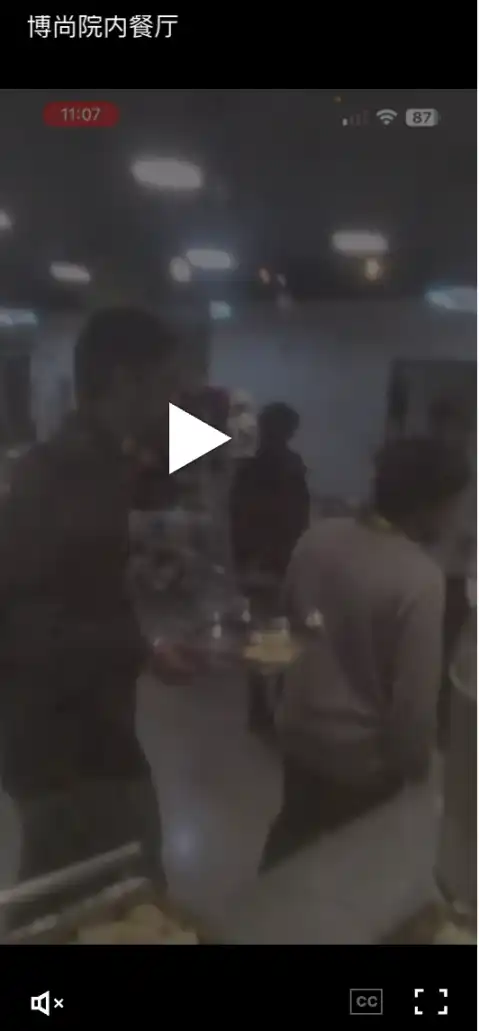
A video secretly filmed through a Signal call showing the interior of the Boson Scam Park cafeteria. Red Bull said the food here tasted strangely chemical. Employees who engage in misconduct, even if they are just late for work or not in the dorm during roll call, will be banned from entering the cafeteria.
I told him that now he should try to safely endure the remaining six months of his contract, and once he is free, we can reconnect. But Red Bull, once again, had already thought ahead. He told me that if the interview ended here, then he would leave now.
He shared with me a long-pondered escape plan: to forge a letter from the Indian police, claiming that he was under investigation in the Jammu and Kashmir region. He would tell his supervisor that if he didn't go back, not only he and his family would be in big trouble, but eventually the whole campus would be implicated. He would plead with the boss to let him go home for two weeks to deal with this matter, and return once it's resolved. He said maybe the boss would believe this story and let him go.
I felt that this plan was simply not feasible, and I honestly told him so: I warned him that the campus managers might discover that the documents were forged and then punish him. But after I dissuaded him from one risky plan after another, he seemed particularly determined about this plan. I asked him to wait a bit more, saying I would try to help him contact someone in the region who is more familiar with the escape strategies of the fraud camp. For example, I know a Southeast Asian activist, who goes only by "W," with experience helping political refugees escape from the region.
Just as we entered the lobby of the office, Red Bull suddenly switched to evasive mode. "It's okay uncle, don't worry," he said as he passed by the security guard, "everything will be fine, okay?" Then, he hung up the phone.
In our regular conversations, Red Bull also mentioned another possible path to freedom: as long as he could come up with around $3,400, he could buy his way out and go home. He just needed to figure out how to get that money.
For a moment, countless thoughts flashed through my mind. First, there was a glimmer of hope for Red Bull, wanting to help him pay off this ransom. But then, I realized that Wired magazine would never give money to a source in this way, let alone pay a ransom to a human trafficking criminal group. This idea went against journalistic ethics. Paying a source is generally considered a corrupt act that creates a conflict of interest and sets an unforgivable precedent. I told Red Bull this, and he quickly replied that he "completely understood," and never asked me or Wired magazine to pay this money.
However, just the proposal of this ransom planted a dark thought in my mind, one that wouldn't go away: What if Red Bull is deceiving me? Initially, after seeing enough evidence to prove that he was indeed the person he claimed to be — a true victim trapped in a Laotian terror fraud camp — I set aside my initial suspicions. And now, nearly two weeks into our acquaintance, this unsettling possibility has always lingered with me: What if he is actually an insider from the fraud camp, and this has all been a scam from the beginning? Just the thought of it makes me feel like I've betrayed all the trust he has given me.
I decided to set aside this suspicion, partly thinking that he might have ulterior motives, and partly, I was more willing to believe that his original intention was sincere.
Meanwhile, a few days later, he brought up the idea of forging documents again. I once again suggested that he wait for someone like W to help instead of risking implementing this plan. But I could sense that his determination was growing day by day. "I have no other choice," he said, "Let's take it step by step."
Plan Exposed, Captivity, Ransom, and Remorse in Desperation
Just a few days later on a Saturday afternoon, I unexpectedly received an email from the same Proton Mail account Red Bull initially used to contact me, which he hadn't used since we switched to Signal. Like the first email, this one had no subject line.
I opened the email, and fear instantly seized me, my mind went blank.
"They have caught me; now they have taken everything from my phone," the email read, "They beat me, and now they might even kill me."
Red Bull had carried out his plan to forge Indian police documents, and now, the worst-case scenario seemed to have occurred.
I suppressed panic and quickly considered various options. I texted the editor and W, hoping they might have some ideas to help. Fifteen minutes after sending the first email, I received another email from Red Bull, which was a bit more coherent: "I am trapped, with no way out. They took my personal phone and ID," the email said, "If you have any way, please help me."
At the same time, W replied to me on Signal. We had a phone call, hastily discussing what could be done to increase Red Bull's chances of survival. I didn't know how Red Bull was sending emails, but W warned me that replying to the email would be very dangerous. His employer already knew; he had lied to them to escape. But for now, it seemed they didn't know that he had been in contact with a journalist, leaking secrets from the park.
If they found out, without a doubt, they would kill him. "The methods would be extremely brutal," W said, "There is no way he would leave that place alive." He advised me to wait for Red Bull to provide further information on his situation and how to communicate safely before taking action.
After an agonizing 24 hours, I finally received another long email from Red Bull, a jumble of words written in his emotionally unstable state.
「Last night those people beat me up, I'm still hungry now, haven't eaten anything, they stopped my card, took away my personal phone and everything, today they will decide how to deal with me. The Indian-origin team leader and everyone else are sitting in front of me, asking me if I know who they are, then beat me up again, and then brought me back to the office. Today I must admit that everything I did was fake, I must admit my mistake. I can't escape from here, I have no money, I can't even get out the main door. I'm contacting you using the office computer. If you have any way, send me an email, I will check. Tell W to contact me via email. They have been torturing me, after bringing me back to the office, I can only use the office computer. Wish you a good night tonight.」
Before I could reply to this email, I received a Signal message: 「Red.」
「Bull.」 I replied.
He quickly sent a message, this time very short: he is locked in a room, the other party is asking him to have someone bring out 20,000 RMB, about 2,800 USD, to release him.
In this life-threatening crisis, I couldn't help but think that this might be the final outcome of the scam I had suspected before: attract a journalist's attention, let him join, make him responsible for the safety of an informant, and then ask him to pay a ransom to save the person.
Anyway, my editors have made it clear to me that neither Wired magazine nor I personally can pay a ransom to Red Bull or his controller. In fact, they are more suspicious than ever that he may be deceiving me. But I still feel that the more likely truth is that this nightmare is all real.
Red Bull seems to have recovered his phone, most likely for the other party to have him find someone to pay the ransom, but I think it's too risky to call him. I sent him a text message, suggesting he try to communicate with W to see who can help him escape. W is experienced in this kind of thing, and if Red Bull is being monitored, it's better to be found talking to an activist than a journalist.
I also told Red Bull that although I am deeply saddened by everything he is going through, I cannot pay the ransom for him, just as I could not pay the ransom for him originally.
「Okay,」 Red Bull wrote, 「I understand.」 He asked me to tell W to contact him, and I agreed.
I watched as he set Signal's disappearing messages to delete after only 5 seconds, which clearly shows how worried he is about being closely monitored.
He sent a thumbs-up emoji, and then the message disappeared.
Over the next few days, I reached out to everyone I thought might be able to help Red Bull, including potential ransom payers: Erin West, W, and the head of the non-profit where W worked. But one by one, they all declined—either concerned about fueling a human trafficking scam, suspicious that Red Bull's story was a hoax, or both.
While West initially showed great enthusiasm when Red Bull first came forward, she now said it sounded like a human trafficking scam she had heard of elsewhere, where fake victims extort fake ransoms. W had several Signal voice calls with Red Bull, but his extreme state of panic left him feeling helpless, believing his desperate plea for ransom (with a promise of reimbursement later) was highly suspect. "This sounds like a 'send me one bitcoin, I'll send you two back' scam," W later told me.
Still, I felt a responsibility to believe everything Red Bull said, assuming it was all true and, within the bounds of journalistic ethics, do everything I could to help him escape.
On the third day of his kidnapping and ransom demands, there seemed to be a slight shift. I could clearly sense that the surveillance on him was no longer as tight, perhaps because the kidnappers were growing impatient with him. I decided to take a risk and make a call. "Things aren't looking good," he said in his usual understated tone, his voice low and close to the phone's microphone. He said he had a fever, been beaten multiple times, slapped, kicked, and forced to confess to forging documents from the Indian police. Once, his boss put a white powder in a glass of water and made him drink it. He said that after drinking it, he became unusually talkative and confident, but soon red rashes appeared on his skin. Sometimes he was taken back to the dorm to sleep, but he hadn't eaten for days and had been deprived of water for a long time.
He had written letters to Indian embassies and consulates across Southeast Asia, but no organization had replied. "No one is coming to help me, I don't know why," he said. After a few minutes on the call, his voice finally broke, suppressed cries emerged, and it was the first time I heard him express self-pity.
But then, he took a deep breath and quickly regained his composure. "I want to cry," he said, "but let's assess the situation first."
On the fourth day of his initial escape attempt, capture, and ransom demand, Red Bull texted me saying there had been a change in the compound. Everything was unusually quiet, and no one was calling him to the office. He asked a few colleagues and found out that there were rumors of a planned raid by Laotian authorities. Their Chinese boss had received inside information and had begun to act discreetly.
The next day, the raid rumors in the park were still circulating, and Red Bull received a hopeful message from the Lao Indian Embassy: "Please provide a copy of your passport and work permit," the message read, "the Embassy will take necessary action to launch a rescue operation."
Redemption seemed within reach. However, in the following days, there was no progress. The Embassy no longer responded to Red Bull's messages. One late night, after several attempts, I finally managed to reach an Indian Embassy official. He seemed to have no knowledge of the person we mentioned, then repeated the government's vague commitments, saying they would conduct a rescue, and then hung up the phone.
Days passed, and the Indian government did not provide any clear answers, the police raid did not occur, and no one was willing to pay the ransom for him. Red Bull seemed to be gradually resigning to his fate. One day, after waking up, I received a series of messages from him, almost like a confession, as if he was afraid of dying in the imprisoned room and wanted to confess his sins.
"I want to honestly say one thing. When I first contacted you, I said I had never lied to anyone, which is not entirely true," he wrote, "the truth is, the Chinese boss forced me to bring two people into the scam. I did not do it willingly and feel guilty about it every day. That's why I want to tell you the whole truth now."
Later, he revealed more details about these two victims to me. From one person, he scammed $504; from another person, he scammed around $11,000. He told me both of their names. I tried to contact them but couldn't find one of them, and the other never replied. According to the scam park's incentive mechanism, Red Bull was supposed to receive a commission from this $11,000 scam amount. However, he said that apart from a meager basic salary, he never received any reward.
Later, I found the photo of the office whiteboard that Red Bull had sent me earlier. It clearly showed the Chinese name the park had given him, "Ma Chao," with a note next to it indicating $504. I had completely overlooked this initially, and he, in fact, never tried to conceal it.
"I entrust you with my most authentic story," Red Bull wrote at the end of his confession, "that is the whole truth."
After a hazy ten days, Red Bull told me that he and his colleagues were asked to pack up. The office computers were boxed up and moved to the dormitory. All employees were to move to a newly constructed building a few hundred feet away, and were instructed to continue working in temporary quarters rather than returning to the office. According to rumors, the long-awaited police raid was finally about to happen.
Red Bull said that during this time, he had been living a life worse than a pig or a dog, isolated by other employees: he had no bedding, sometimes could only sleep on the floor, was only given food when someone remembered, and it was often spoiled leftovers. He had lost a lot of weight, was sore all over, had a fever, and felt like he had the flu.
However, even so, Red Bull did not give up and was still thinking about collecting more evidence.
During the office shutdown, work equipment was allowed to be brought into the dormitory. The relaxed security in the park made Red Bull realize that this was an opportunity. One day, while a roommate was asleep, he found the other person's work phone.
He had seen this roommate enter the password from behind before, and now he quickly unlocked the phone. Then, Red Bull used WhatsApp's "linked devices" feature to link his personal phone with this work phone, allowing him to view the internal communication messages of the fraudulent park. He used this permission to record the screen meticulously, reviewing the park's months-long internal conversations and all the chat log screenshots his colleagues had posted regarding the victims.
Then one day, he found his work phone in another dorm room. Since the failed escape attempt and being caught, he hadn't touched that phone again. He once again used the WhatsApp linking method to enable his personal phone to access messages from this device. He then recorded the screen as he reviewed the chat logs. These videos comprehensively documented three months of the park's daily operations. Red Bull sent me clips of these videos, but the full videos were nearly 10GB, far beyond what his phone data plan could send.

Surviving in Desperation, Returning to Hometown
A week later, after he and his colleagues moved to a new building, Red Bull sent me a series of dramatically different short videos: in one video, dozens of South Asian men stood outside a tall building, lined up by the Laotian police in khaki and black uniforms; in another video, a group of similarly situated individuals sat in rows in a lobby. Red Bull told me that the police raid had finally arrived, wiping out those fraud nests that had not evacuated the old office area like his boss before. Now, these videos were circulating among the employees who had narrowly escaped the raid.
While the other fraudulent nests in the park were struggling to adapt to the new temporary office environment, Red Bull had clearly been suffering in purgatory for weeks. He begged the boss desperately, hoping to be let go, saying he was no longer of any use to them. He had no money, and obviously, no one was willing to pay a ransom for him. In this already crowded temporary building, he was just a burden, needlessly taking up space.
Shockingly, the boss agreed. They didn't kill him but instead told him he could leave.
To scrape together enough money for the journey home, Red Bull borrowed a few hundred dollars from his brother. He then wrote a letter to an Indian acquaintance in another nearby scam center, saying he needed to go home to visit family but would be back soon. He proposed that if the acquaintance could send him money to buy a plane ticket, he would split the recruitment referral fee with him upon his return. Soon enough, he had a few hundred more dollars in his account. Red Bull, having scammed a scammer, also found a way home.
In late July, Red Bull's team leader, Amani, stopped him outside the dormitory, returned his passport, and told him he could leave. Red Bull said most of his belongings, including his shoes, were in the dormitory, and he was now only wearing a pair of flip-flops.
However, Amani said he didn't care. Fifty K then sat in an Audi, waiting to take Red Bull to the border of the Golden Triangle area. From there, he would be on his own. Wearing flip-flops, he got into the back seat of the car and left.
Later, after successfully escaping, Red Bull still harbored bitterness about this final humiliation, as if it were more unbearable than all the slaps, kicks, druggings, and hunger he had endured. "I never thought they would treat me like that," he wrote in a text message, accompanied by a crying emoji, "They didn't even let me put on my own shoes."
In the days following his transport to the border, Red Bull traveled by bus, train, and even purchased an extremely cheap, multi-stopover flight ticket with at least five transfers to finally reach India. On his way back to the village, he began sending me WhatsApp screen recordings taken from his phone, which he had secretly brought out of the center.
These files ultimately became the most valuable and unique materials he provided me with. A team of reporters from Wired magazine later compiled these materials into a 4200-page screenshot PDF and shared it with experts studying the scam center. We discovered that these documents meticulously documented life inside the scam center, listing every successful scam in recent months, vividly depicting the scale and hierarchy of this scam hub. At the same time, the files exposed the day-to-day lives of the coerced laborers implementing these scams: their daily routines, fines, punishments they endured, and the Orwellian rhetoric bosses used to control, manipulate, and discipline them.
In the end, no one provided Red Bull with the escape assistance he needed—not the human rights organizations I tried to contact, not the Indian government that promised but failed to act on rescue efforts, not Wired magazine. Red Bull saved himself, relying solely on his own efforts. Even in the absence of external support, stuck in a dire situation, he managed to gather this evidence and hand it over to me, making it the most significant data provided thus far.
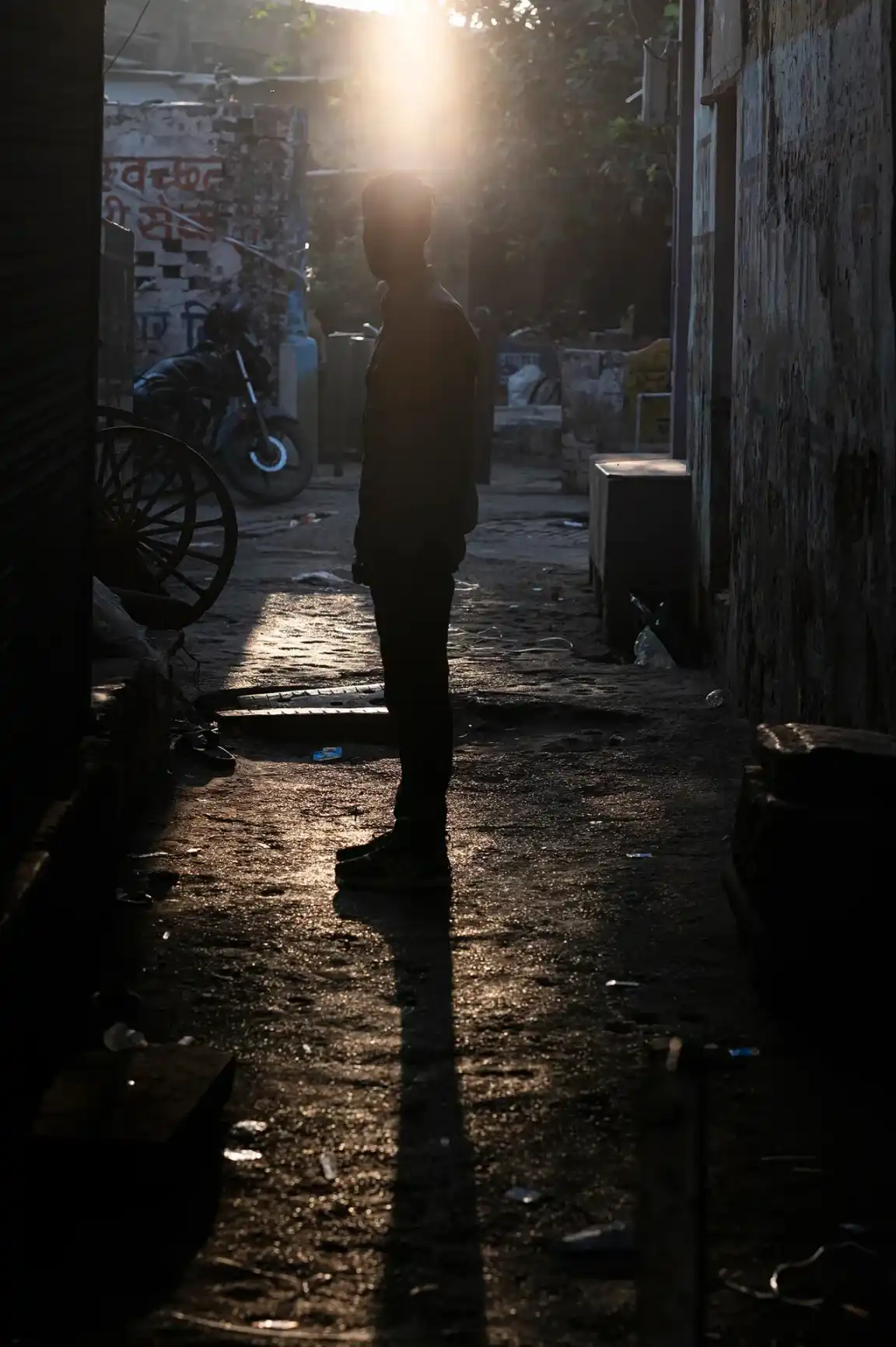
Red Bull Returns to His Homeland India
Red Bull's hands are not clean. He admitted to me that, under coercion, he deceived two innocent individuals. But despite my doubts, as well as those of others I tried to contact on his behalf, his original intent as a whistleblower was ultimately proven to be genuine.
Now, there is no longer any question: Red Bull is indeed real.
In a quiet backstreet of a city in India, I waited alone, surrounded by dozens of Rhesus macaques—some lounging lazily, others grooming each other, and a few hopping around on balconies and power lines in the neighborhood. The monkeys eventually dispersed, retreating into the trees and rooftops, as a white SUV emerged from a corner, drove down the street, and pulled up in front of me.
The door opened, and Red Bull stepped out, wearing the same bashful smile as when we first connected via Signal video call. He appeared smaller and more fragile than I had imagined, but much livelier than on the phone screen, dressed in a flannel button-up shirt with freshly cut hair. He approached me, his smile widening, shedding his earlier reserve. I reached out, and we shook hands.
Finally free, Red Bull now allowed me to disclose his true identity: Mohammad Muzahir.

Mohammad Muzahir, a.k.a. Red Bull, seated in a car after his first meeting with a Wired journalist in India
"It's so great to see you, I'm truly overjoyed. I've been looking forward to this day, to meet you in person and share everything," Muzahir said as I helped him check into his hotel and we rode together in the SUV to where I was staying. "I'm just ecstatic right now."
From Muzahir's escape to this meeting, these three months have been tough. Nearly penniless, he could no longer dedicate himself to building websites and Facebook pages as before; he didn't even have a laptop. To survive, he worked as a waiter and in construction. Besides odd jobs, applying for work and university abroad (still unsuccessful to date), Muzahir obsessively researched scam hubs on his heavily cracked and damaged phone screen filled with garbled lines of code.
During his research, Muzahir discovered that most of the men captured in that raid were later sent back to the Golden Triangle. He believed that the police operation was merely for show and had little to no substantial impact on local scam operations. He also learned that the scam operation that enslaved him had shifted to Cambodia, taking many of his former colleagues with it.
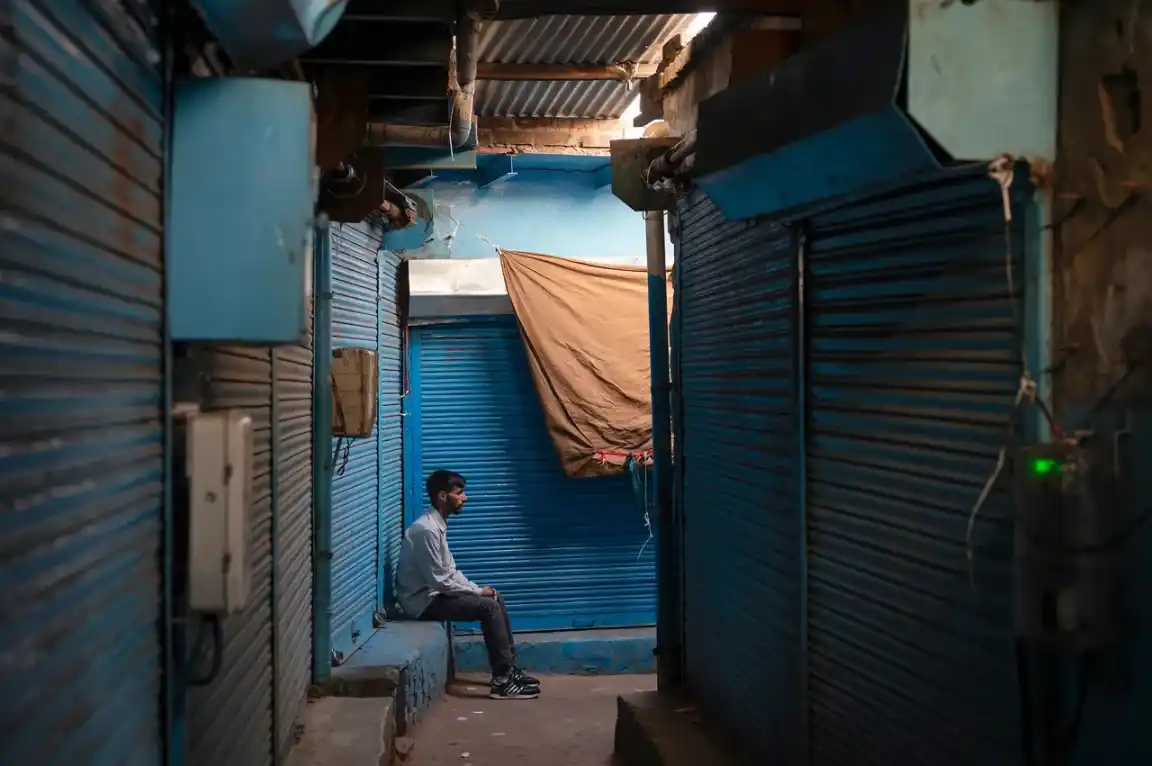
Muzahir always carried guilt for those colleagues he left behind in the camp and agonized over having scammed two people. Photo by Saumya Khandelwal
In an empty basement lounge of the hotel where I was staying, we sat down, and Muzahir told me that he only slept three to four hours a night. He said what kept him up at night was that the scam camp he escaped from, along with dozens of similar dens, was still operating with impunity in Southeast Asia and even expanding its reach to other parts of the world. He always couldn't help but think about those colleagues he left behind. He also felt deep remorse for having scammed two people, even though he had always told himself that it was the price he had to pay before becoming a whistleblower. He dreamt of making enough money to somehow compensate those two individuals. "To be honest, the ending of this story is not a good one," he said.
After experiencing countless betrayals and working in a den where large-scale betrayal was the business model, Muzahir's biggest issue now is being unable to trust anyone anymore. Even when I tried to introduce him to some human rights NGOs and survivor groups, he was very resistant. "These people are just wasting time, giving false hope," he once texted me, "I will never easily trust anyone again."
For some reason, I became an exception to his almost universal mistrust. But now that we finally met, I felt compelled to confess to Muzahir: I too had moments of distrust towards him, even stupidly worrying that he might be deceiving me when he needed help the most.
To my relief, he just smiled. "You did the right thing," Muzahir said. He pointed out that if I had paid a ransom or even helped him escape earlier, he would have left the camp prematurely, and there wouldn't have been a chance to record and share the full WhatsApp conversation history of the scam camp.
Muzahir now eagerly hopes that Wired magazine will publish our full analysis report on these materials. I once mentioned to him that after the report is released, the Chinese mafia might seek retaliation against him in India. Even if he leaves India as planned, he may not be safe elsewhere. We can redact his identity, but his team is small, and even if we don't publish a detailed account of his experiences, his former bosses are likely to immediately know who the leaker is.
Muzahir responded that in order to make his story public, he was willing to take on this risk, including revealing his true identity. After going through all of this, Muzahir still holds onto his idealism. He hopes that his experience will not only serve as a warning, but also inspire more people like him.
At the moment he explained this decision, I saw more clearly than ever the driving force behind his willingness to take on all risks: he was speaking not only to me, but to everyone in the growing fraud enclave industry who may choose to resist or blow the whistle, to the global power structures that enable this industry, to the survivors, to the hundreds of thousands trapped and silenced in this modern slave system.
"If someone sees my story, perhaps more Red Bulls will come forward to speak," Muzahir said with his usual shy smile. "When there are countless Red Bulls speaking out in this world, everything will get better."
You may also like

Binance Alpha Cools Off: User Count Drops 60%, Is Nobody Collecting "Eggs" Anymore?

Undercover for 40 Days, Exposing the Golden Triangle Park Crypto "Rug Pull"

Demystifying the NYSE Tokenized Securities Platform: Why Enable 24/7 Trading
After opting for a refund following a 122x oversubscription, what new trick is FIGHT playing?

Caroline Ellison was released today. What role did she play in the FTX collapse back then?

「Money Printer」 PUMP.FUN Establishes Investment Arm, Can $3 Million Keep a Good Project?

If I were the founder of Kaito, how would InfoFi 2.0 survive?

Why Can Coinbase Halt a CLARITY Act Vote with Just One Sentence?

Polymarket Sponsors Golden Joystick Awards, Predicts How Hollywood Turns into Odds Table

Sentient Reveals Tokenomics, How Will the Market Price It?
ThunderChain Resumes Legal Battle as Former CEO Chen Lei Accused of Embezzlement for Cryptocurrency Speculation - What Happened Back Then?
Is Leveraged Bitcoin DCA More Profitable than Spot?
Five-year Backtest Data suggests that, for long-term Bitcoin investment, spot trading is actually the most cost-effective, as leverage did not bring the expected returns.

Alibaba Backed Latin America Stablecoin Company, Why VelaFi?
Wintermute's 28-Page Report Unveils the Inner Workings of Off-Chain Liquidity

Tether Freezes $182 Million in Assets in One Day, Is USDT Still a Neutral Coin?

80% of oil income settled in stablecoins, Venezuela makes USDT its second currency

After Stepping Down as Mayor of New York City, He Pivoted to Selling Cryptocurrency



 App
App